FramanAgridev Development Company Ltd
 |
|---|
 |
 |
 |
 |
Chicken
Our understanding of the following world situation of Chicken and Turkey rearing has adequately prepared us to meet the needs and challenges of this sector as we establish Green field poultry farms.
There are more chickens in the world than any other bird. In fact, more than 50 billion chickens are reared annually as a source of food, for both their meat and their eggs. Chickens farmed for meat are called broiler chickens, whilst those farmed for eggs are called egg-laying hens.
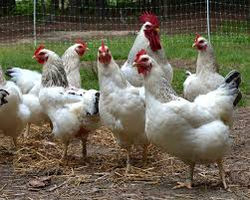
Chickens are gregarious birds and live together as a flock with a distinct hierarchy or “pecking order.” They would naturally spend their day foraging for food, scratching the ground looking for insects and seeds. When a cockerel finds food, he may call the hens to eat it by clucking in a high pitch and picking up and dropping the food. This behaviour can also be seen in mother hens, calling their chicks.
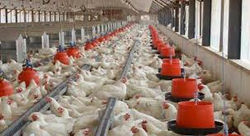
Chickens tend to range widely, using the cover of trees and vegetation for safety from predators. Life on some farms and small-holdings is just like that. Unfortunately, the vast majority of the 50 billion chickens reared each year experience intensive farming methods.
 |
|---|
 |
 |
 |
Turkey
Modern turkeys are the descendants of wild varieties, originally from North America. They were brought to Africa by the Spanish who had discovered them as a favourite domesticated animal of the Aztecs. Prior to the Second World War, turkey was considered a luxury around the world. Intensive farming of turkeys, introduced after the war, has resulted in turkey becoming a popular poultry meat.
Over 650 million turkeys a year are used for meat production, globally. Of these, over 240 million are in the US and over 200 million in Europe, over 200 million in Asia and around 10 million in Africa and the Middle East. Modern commercial turkeys are selectively bred to grow much faster and with more breast meat than traditional turkeys. Turkey chicks are typically reared in enclosed, broiler-type sheds, containing thousands of birds.
By the time they are ready for slaughter at between 9 and 24 weeks of age, turkeys will weigh between 5kg and 20kg or more. In intensive turkey farming, the Turkeys have no access to the outdoors during their lives. When they reach slaughter weight they are loaded into crates to be transported to the slaughter house. They may be hung by their feet from shackles whilst still conscious. They are then dipped in an electrified water bath to stun them before their throats are cut.

A Nigerian-Israeli leading provider of Agricultural Products, Infrastructure & Environmental Solutions.