FramanAgridev Development Company Ltd
 |
|---|
 |
 |
 |
 |
Cotton
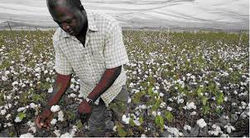
Cotton ginning always has been an agricultural operation. However, questions frequently are raised by state and federal regulatory agencies and standard-setting code organizations regarding the classification of cotton ginning as agriculture rather than as a general industry process. It is very important that cotton ginning is correctly classified as an agricultural operation instead of general industry to avoid being subjected to inappropriate, burdensome, and costly general industry standards, which could adversely affect the operation of a gin and cotton quality.
The cotton plant is a warm-season woody perennial shrub, which is grown as an annual field crop. Because the plants are grown in various environments, cotton farmers can choose from many varieties of cotton that are bred to be productive in various environmental and cultural conditions. After the seeds are planted and the plants begin to grow and develop, they must be protected from insects, diseases and weeds.
Cotton is mostly grown in monoculture and is a very pesticide-intensive crop. Although it is only grown on 2.5% of the world’s agricultural land, it consumes 16% of all the insecticides and 6.8% of all herbicides used worldwide.
 |
|---|
 |
 |
 |
 |
Banana
Bananas are both a major staple in the global tropical zone as well as an important cash crop and significant fruit varietal available for American and European consumption. They are the fourth most important crop worldwide for developing countries, where they provide an important starch source, especially in Africa and Asia. For instance, in Africa, as much as 400kg of plantain are consumed per year as a main source of calories. Bananas are produced mainly in tropical and sub-tropical areas of Africa, Asia, and America, as well as the Canary Islands and Australia. The fruit is non-seasonal, and thus available year round, where it provides key foodstuffs between seasonal harvests of other staple crops.
The banana is a perennial plant that replaces itself. Bananas do not grow from a seed but from a bulb or rhizome. The time between planting a banana plant and the harvest of the banana bunch is from 9 to 12 months. The flower appears in the sixth or seventh month. Bananas are available throughout the year - they do not have a growing 'season'.
Bananas are grown in tropical regions where the average temperature is 80° F (27° C) and the yearly rainfall is between 78 and 98 inches. They require moist soil with good drainage. In fact, most bananas exported are grown within 30 degrees either side of the equator.
Bananas are produced in 135 countries and territories across the tropics and subtropics. The majority producers are farmers who grow the crop for either home consumption or for local markets (less than 15 per cent of the global production of more than 144 million metric tonnes is exported). The goal of this section is to explore all the banana-producing countries and territories.
 |
|---|
 |
 |
 |
 |
Rice
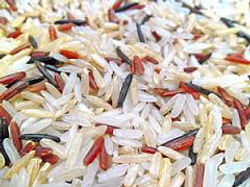
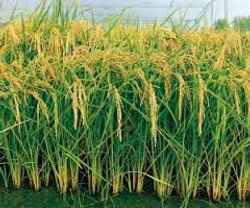
Rice grows in a wide range of environments and is productive in many situations where other crops would fail. Most classifications of rice environments are based on altitude (upland vs. lowland) and water source (irrigated or rainfed).
Nearly 100 million people depend on the production of rice from rainfed upland regions to provide them with rice to eat as their daily staple food. Almost two-thirds of the world’s total upland rice area is in Asia. Bangladesh, Cambodia, China, India, Indonesia, Myanmar, Thailand, and Vietnam are important producers.
Although the rice technology of the 1960s and 70s focused on irrigated rice, farmers in the uplands were not forgotten. Researchers produced cultivars adapted to poor soils, and with improved blast resistance and drought tolerance. Some have out yielded traditional varieties by more than 100 percent in evaluations. Scientists at national agricultural research systems have crossed these improved rice’s with local cultivars and farmers are now beginning to grow the progeny. But more improvements are needed to meet the new challenges.

A Nigerian-Israeli leading provider of Agricultural Products, Infrastructure & Environmental Solutions.